
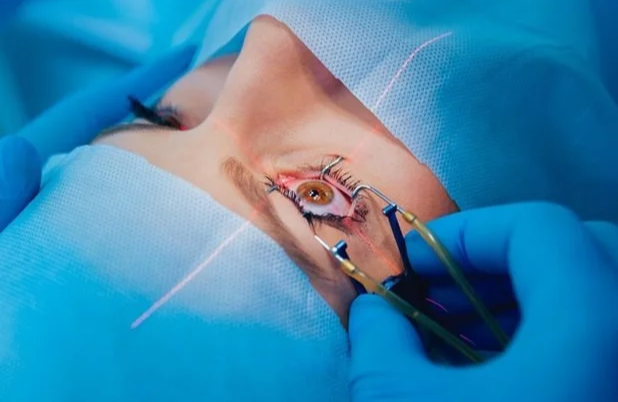
LASIK (Laser-Assisted In Situ Keratomileusis) is one of the most common refractive laser surgeries used to correct vision problems like nearsightedness, farsightedness, and astigmatism. The goal of a LASIK surgeon is to reshape the cornea — the clear front window of the eye — so that light entering the eye focuses accurately on the retina, restoring sharp vision.
The Role of a Skilled Refractive (LASIK) Surgeon
A LASIK surgeon, also called a refractive surgeon, plays a central role in every step of the process — from evaluating candidacy to performing the surgery and guiding postoperative healing. First, the surgeon conducts a comprehensive preoperative assessment to check corneal thickness, eye health, refractive error stability, and general health. A skilled surgeon ensures that your eyes are suitable for LASIK and that the risk of complications is minimized.
During surgery, the surgeon makes a flap in the cornea using either a microkeratome (a mechanical blade) or more commonly a femtosecond laser, depending on their training and the technology available. Once the flap is folded back, an excimer laser is used to precisely reshape the underlying corneal tissue, removing microscopic amounts of tissue based on your prescription. After reshaping, the flap is repositioned and adheres naturally without stitches.
Advanced Techniques and Customization
Refractive surgeons today often use advanced, customized technologies to improve safety and outcomes. For example, topography-guided LASIK maps and corrects irregularities across thousands of corneal points to reduce side effects like halos or glare. These refinements allow the surgeon to treat each eye in a highly personalized way, maximizing visual quality.
Benefits of LASIK When Done by an Expert Surgeon
- Rapid Vision Improvement: Many patients notice better vision within hours or by the next day, with minimal discomfort due to numbing drops.
- Reduced Dependence on Corrective Lenses: A successful LASIK performed by an experienced refractive surgeon can free people from the daily use of glasses or contacts.
- Long-Term Stability: While vision may slightly change over time, LASIK often delivers long-lasting improvement. Patient satisfaction and quality of life tend to improve after surgery.
- Minimal Discomfort and Quick Recovery: Because the procedure is minimally invasive and done under topical anesthesia, recovery is typically fast with limited downtime.
Risks and How a Skilled Surgeon Mitigates Them
As with any surgery, LASIK carries certain risks — but many can be significantly reduced by choosing a qualified LASIK surgeon.
- Dry Eyes: One of the most common side effects is reduced tear production, which may persist for six months or more. An experienced surgeon assesses tear function beforehand and prescribes lubricating eye drops or other therapies as needed.
- Visual Disturbances: Some patients experience glare, halos around lights, double vision, or blurry vision, particularly at night. Advanced technologies and proper flap design help reduce these symptoms.
- Flap Complications: Problems related to the corneal flap (e.g., irregular or incomplete flap) are rare but possible. A surgeon with extensive training and experience is less likely to make such errors.
- Corneal Ectasia: This rare but serious condition involves weakening and bulging of the cornea post-surgery. Thorough preoperative screening ensures that only patients with adequately thick and stable corneas are selected.
- Regression or Undercorrection: Sometimes, the desired refractive outcome is not fully achieved, and enhancement surgery might be needed.
Patient Assessment and Safety Measures
A LASIK surgeon carries out detailed screening before recommending surgery. This includes:
- Measuring corneal thickness and curvature.
- Confirming that your prescription has been stable for at least a year.
- Evaluating overall eye health to rule out issues like glaucoma, dry eye syndrome, or corneal disease.
- Discussing realistic expectations, potential risks, and lifestyle implications. A good surgeon takes time to explain outcomes and answer questions.
Postoperative Care and Vision Stabilization
After LASIK, follow-up with your refractive surgeon is critical. They will monitor healing, manage side effects, and check that the corneal flap is stable. Eye drops (antibiotic, steroid, or lubricating) are prescribed to help recovery. Most patients achieve their best-corrected vision within a few weeks, though final stabilization can take longer. Long-term satisfaction is strongly linked to the skill of your surgeon. A well-trained LASIK surgeon not only performs the surgery but also monitors outcomes and performs enhancements if needed.
Evidence on Safety and Effectiveness
Clinical studies and systematic reviews support LASIK as a safe and effective option when done properly. LASIK patients generally report high satisfaction and improved quality of life compared to before surgery. Serious complications are rare, especially when surgery is performed by experienced refractive surgeons.
Conclusion
LASIK surgery, guided by a skilled refractive surgeon, is a transformative procedure that can correct vision defects by precisely reshaping the cornea. By combining advanced laser technology, thorough preoperative assessment, and expert surgical technique, a qualified LASIK surgeon maximizes the likelihood of excellent visual outcomes while minimizing risks. If you are considering LASIK, this partnership with your surgeon is critical — not just for your short-term vision improvement, but for your long-term eye health and satisfaction. Understanding how much does LASIK cost is also essential in making an informed decision about pursuing this vision-correcting procedure.