
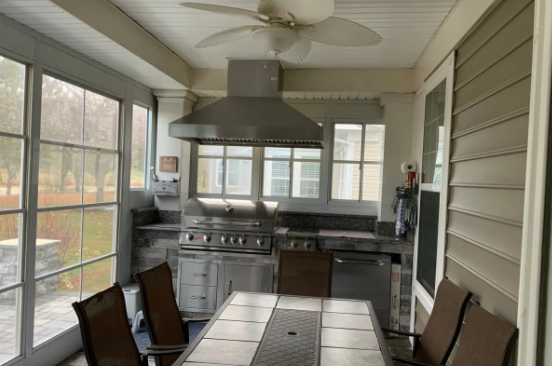
An outdoor kitchen vent hood is one of the most important yet often overlooked components of a backyard cooking space. While grills, pizza ovens, and side burners create an inviting atmosphere, they also generate smoke, grease, heat, and odors that can quickly make the space uncomfortable and unsafe. Without proper ventilation, smoke accumulates under covered patios or pergolas, grease settles on surfaces, and airflow becomes restricted. Installing the right outdoor kitchen vent hood improves air quality, protects appliances, and ensures a more enjoyable cooking experience for everyone.
This guide explains the main types of vent hoods, how to choose the correct size, and what costs to expect so you can make an informed decision.
Why an Outdoor Kitchen Vent Hood Matters
Outdoor cooking appliances produce more heat and smoke than most indoor ranges. High-BTU grills, charcoal smokers, and sear burners release large amounts of airborne grease particles and combustion byproducts. In a covered outdoor kitchen, these contaminants can stain ceilings, create fire hazards, and damage cabinetry.
A properly designed outdoor kitchen vent hood captures smoke and grease at the source and moves it away from the cooking zone. This helps maintain clear visibility, reduces lingering odors, and extends the life of your outdoor appliances and finishes. In many regions, building codes or manufacturers also recommend ventilation systems when installing grills beneath a roof or enclosure.
Types of Outdoor Kitchen Vent Hoods
Choosing the right type depends on your kitchen layout, cooking style, and whether ducting is feasible.
Wall-Mounted Hoods are the most common option. Installed against a wall or backsplash, they vent air either through ductwork to the exterior or upward through a roof vent. They are efficient, widely available, and suitable for most built-in grill stations.
Island Hoods are suspended from the ceiling above cooking equipment placed in the center of an outdoor kitchen. Because they are not backed by a wall, they typically require higher airflow ratings to capture smoke effectively. They offer a clean, modern look but often cost more.
Under-Cabinet or Insert Hoods fit into custom enclosures or cabinetry. These are ideal for homeowners who want a seamless design while still achieving strong ventilation. Inserts allow flexibility in matching the hood with stone, wood, or metal finishes.
Ducted systems are strongly recommended for outdoor spaces because they physically remove smoke and grease outside the area. Ductless or recirculating hoods are less effective outdoors and are generally not suitable for high-heat grilling.
Sizing Your Vent Hood Correctly
Proper sizing is critical for performance. A hood that is too small will allow smoke to escape, while one that is too large may be unnecessarily expensive.
Width should extend at least 3 to 6 inches beyond each side of the grill or cooking surface. For example, a 36-inch grill should pair with a hood that is at least 42 inches wide. This added capture area improves efficiency, especially in breezy outdoor environments.
Airflow is measured in cubic feet per minute (CFM). Outdoor grills typically require higher CFM than indoor ranges. A good rule of thumb is 600 to 1200 CFM for standard gas grills and 1200 to 1500 CFM or more for high-BTU or charcoal setups. Always check manufacturer recommendations.
Mounting height also affects effectiveness. Most hoods perform best when installed 30 to 36 inches above the cooking surface, though outdoor installations may vary slightly depending on ceiling height.
Materials and Durability
Outdoor conditions demand tougher construction than indoor kitchens. Look for vent hoods made from 304 or 316 stainless steel, which resist rust, moisture, and corrosion. Seamless welding and weatherproof finishes improve longevity. Baffle filters are preferred because they handle grease better and are easier to clean than mesh filters.
Costs and Budget Expectations
The cost of an outdoor kitchen vent hood depends on size, power, and build quality. Basic stainless steel wall-mounted models typically start around $500 to $900. Mid-range units with higher CFM ratings and better finishes range from $1,000 to $2,000. Premium or custom island hoods can exceed $2,500 to $4,000.
Installation adds additional expense. Professional ductwork, electrical connections, and mounting may cost $300 to $1,500 or more depending on complexity. While DIY installation is possible, proper venting and safe wiring often justify hiring a professional.
Conclusion
Selecting the right outdoor kitchen vent hood ensures safer cooking, cleaner air, and longer-lasting equipment. For larger grills and expanded cooking surfaces, many homeowners find that wider options, such as 42 inch range hoods, provide the extra coverage needed for effective ventilation. By understanding the different types, choosing appropriate dimensions, and budgeting for quality materials and installation, you can create a functional and comfortable outdoor kitchen that performs as well as it looks.