
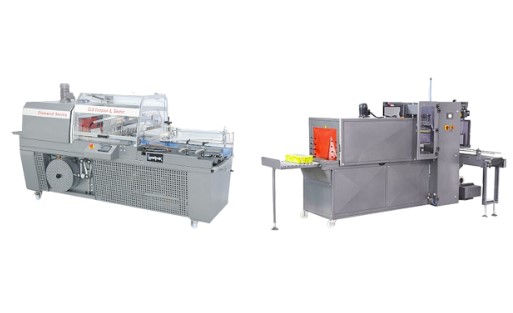
In modern manufacturing and logistics, packaging plays a crucial role in ensuring product safety, stability, and presentation. Businesses dealing with high-volume goods need reliable systems that can streamline operations while maintaining quality. This is where an industrial shrink wrap machine becomes essential, offering a practical solution for efficient and secure packaging.
Shrink wrapping technology has evolved significantly, making it suitable for a wide range of industries, including food, pharmaceuticals, and consumer goods. These machines help businesses achieve consistent packaging results while minimizing manual effort and operational delays.
What Is an Industrial Shrink Wrap Machine?
An industrial shrink wrap machine is a packaging system that encloses products in a plastic film and applies heat to shrink the film tightly around them. This creates a secure, protective layer that safeguards items from dust, moisture, and tampering.
The process uses thermoplastic materials such as polyethylene (PE), which are widely used for industrial applications due to their durability and strength.
These machines are designed for large-scale operations and can handle everything from individual items to bulk packaging and pallet loads.
How Does Shrink Wrapping Work?
The working process of an industrial shrink wrap machine typically involves four main steps:
1. Wrapping the Product
The product is first covered with a shrink film, either manually or automatically, depending on the machine type.
2. Sealing the Film
The machine seals the film using heat or pressure, creating an enclosed package.
3. Applying Heat
The wrapped product passes through a heat source, such as a shrink tunnel, which causes the film to contract tightly around the item.
4. Cooling
After shrinking, the film cools and hardens, forming a durable protective layer.
This process ensures that products remain stable during storage and transportation.
Types of Industrial Shrink Wrap Machines
There are several types of industrial shrink wrap machine systems available, each suited for different operational needs:
Manual Machines
These require human involvement for wrapping and sealing, making them suitable for small-scale operations.
Semi-Automatic Machines
These machines automate certain steps, like sealing or heating, while still requiring some operator input.
Fully Automatic Machines
Designed for high-volume production, these systems handle the entire process—from feeding the product to sealing and shrinking—without manual intervention.
Sleeve Wrappers
Common in industrial settings, sleeve wrappers are used for bundling multiple products together, such as bottles or boxes.
Key Benefits of Using Industrial Shrink Wrap Machines
Enhanced Product Protection
Shrink wrapping creates a tight seal that protects products from environmental factors like dust, moisture, and contamination.
Improved Load Stability
By tightly securing items, these machines reduce movement during transit, minimizing the risk of damage.
Cost Efficiency
Shrink wrapping reduces the need for additional packaging materials, making it a cost-effective solution for businesses.
Better Presentation
The clear film provides a clean and professional appearance, which is especially important for retail products.
Versatility
An industrial shrink wrap machine can handle products of various shapes and sizes, making it suitable for multiple industries.
Applications Across Industries
Shrink wrapping technology is widely used across different sectors due to its flexibility and efficiency:
- Food and Beverage: Packaging bottles, cans, and perishable goods
- Pharmaceuticals: Ensuring tamper-proof packaging
- Electronics: Protecting sensitive components
- Logistics and Warehousing: Securing pallet loads for transport
Its ability to adapt to different packaging requirements makes it an essential tool in modern supply chains.
Factors to Consider When Choosing a Machine
Selecting the right industrial shrink wrap machine depends on several factors:
Production Volume
High-speed automatic machines are ideal for large-scale operations, while smaller setups may benefit from manual or semi-automatic systems.
Product Size and Shape
Ensure the machine can accommodate the dimensions and shape of your products.
Level of Automation
Choose a machine that aligns with your operational needs and workforce availability.
Material Compatibility
Different machines support different types of shrink films, so it’s important to select one that matches your packaging requirements.
Conclusion
Industrial packaging has become more advanced and efficient with the adoption of shrink wrapping technology. Understanding how a machine shrink wrap system works can help companies choose the most suitable solution for their packaging needs. Businesses can achieve better product protection, improved efficiency, and consistent packaging quality by using the right equipment.