
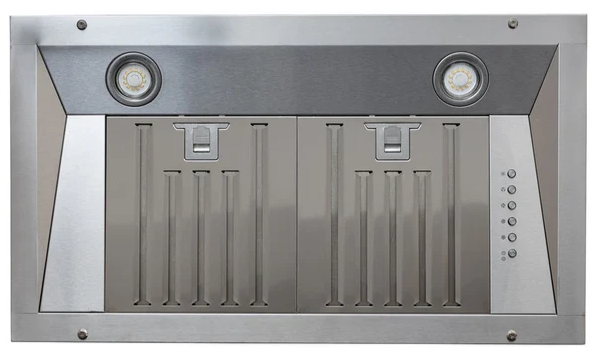
A kitchen ventilation system plays an important role in managing cooking odors, airborne grease, smoke, and excess heat. However, choosing an effective solution does not mean sacrificing the appearance of your kitchen. Insert range hoods offer a discreet alternative to conventional visible hood designs by fitting inside custom cabinetry or a decorative enclosure. This makes them especially useful for homeowners planning a coordinated kitchen layout. Understanding their features, ventilation capacity, installation requirements, and available configurations can help you choose a model that suits your cooking habits and design goals.
What Are Range Hoods?
Insert Range Hoods are ventilation units installed inside a custom-built hood structure or cabinetry above a cooking surface. Unlike complete wall-mounted or island hoods, their main components remain concealed behind the exterior enclosure. Homeowners can choose materials and finishes for that enclosure to complement surrounding cabinets, countertops, and backsplashes.
This flexibility makes inserts suitable for contemporary kitchens, traditional interiors, and custom renovation projects. The ventilation unit performs the extraction work while the visible structure reflects the homeowner’s preferred style. Before choosing a model, check its dimensions, mounting requirements, blower configuration, and compatibility with the planned enclosure.
Key Benefits of Kitchen
A Clean, Integrated Appearance
One of the main advantages of kitchen range hood inserts is their ability to blend into the overall kitchen design. A custom enclosure can match existing cabinetry or introduce a contrasting material for a distinctive focal point. Since the ventilation equipment is largely hidden, the finished space can maintain a consistent visual style without a prominent appliance dominating the cooking area.
Ventilation Options for Different Cooking Needs
Cooking methods influence the amount of smoke, grease, steam, and odor a ventilation system needs to handle. Models with different airflow capacities allow homeowners to compare options based on their cooking frequency and intensity. Insert range hoods include configurations with capacities ranging from 600 CFM to models reaching 1,200 CFM, depending on the product.
CFM, or cubic feet per minute, measures the volume of air a blower moves. Higher airflow may be useful for demanding cooking conditions, but performance also depends on hood coverage, duct design, installation, and the type of cooking equipment.
Flexible Blower Configurations
Standard inserts house the blower within the unit, while remote-blower models position the blower separately from the visible insert assembly. Remote configurations can provide greater flexibility during kitchen planning and may reduce motor noise near the cooking area. Actual noise levels depend on the equipment, installation, and operating speed, so compare manufacturer specifications before purchasing.
Choosing the Right Insert for Your Kitchen
Start by measuring the cooking surface and available enclosure space. The insert must fit securely within the planned structure, with suitable clearance from the cooktop according to the manufacturer’s installation instructions. Consider the hood’s width, depth, mounting height, electrical requirements, and access for future maintenance.
Next, assess your cooking habits. Frequent high-heat cooking may call for greater extraction capacity, while lighter everyday use may require less airflow. Also review the available fan speeds, lighting, filter design, and control options. These features affect daily usability as much as the headline airflow rating. Your kitchen layout matters, too. Wall-based cooking areas, islands, and outdoor kitchens may require different insert designs.
Ducting, Installation, and Maintenance
A well-selected insert needs a properly planned ventilation path. Ducted systems carry extracted air outdoors, while recirculating configurations filter air before returning it to the room when the model supports that setup. Duct size, length, and bends influence airflow, so follow the manufacturer’s specifications and avoid unnecessary turns where possible.
Professional installation can help ensure the enclosure, electrical connections, ductwork, and mounting clearances meet product requirements and applicable local codes. Regularly clean grease filters according to the instructions and inspect the system for buildup or airflow problems. Consistent maintenance helps preserve ventilation performance over time.
Conclusion
The right insert can balance effective kitchen ventilation with a custom, uncluttered design. Compare dimensions, airflow, blower placement, filtration, and installation requirements before making a decision. Explore the Smart Home Luxury collection to review available configurations and find a solution suited to your kitchen layout, cooking routine, and preferred finish. With careful planning and proper maintenance, a well-matched insert can support a more comfortable cooking environment while keeping the overall kitchen design cohesive.