
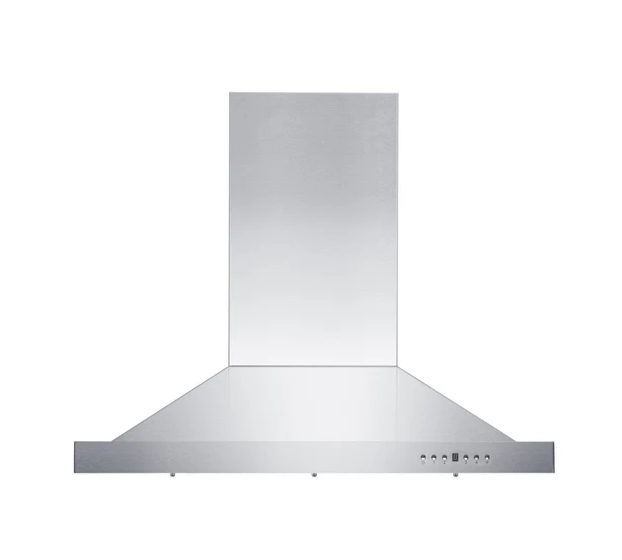
Kitchen ventilation helps manage the smoke, grease, steam, heat, and odors produced during everyday cooking. While many kitchens use ventilation systems connected to exterior ductwork, that setup is not practical for every home. Building structure, apartment restrictions, kitchen layout, and renovation limitations can make installing an exhaust duct challenging.
A recirculating ventilation system provides another approach. A ductless range hood draws air from above the cooking surface, passes it through filtration, and returns the filtered air to the kitchen instead of exhausting it outdoors. This makes ductless ventilation worth considering when external ducting is unavailable or difficult to install.
What Is a Ductless Range Hood?
A ductless range hood is a ventilation appliance that operates without a connection to an exterior exhaust duct. Instead of sending kitchen air outside, it uses filters to capture airborne contaminants before releasing the air back into the room.
Most systems use a combination of grease filtration and odor filtration. The grease filter helps trap airborne grease particles, while a charcoal or carbon filter can help reduce cooking odors.
How Does Recirculating Ventilation Work?
The process generally begins when the hood’s fan draws air upward from the cooking surface. That air passes through the grease filter, where suspended grease and other particles are captured.
The air then moves through an odor-control filter, commonly containing activated carbon. Carbon filtration works by adsorbing certain odor-producing compounds. Once filtration is complete, the treated air is released back into the kitchen.
When Is a Kitchen Hood Useful?
A ductless kitchen hood can be particularly useful in kitchens where installing exterior ductwork is impractical. Apartments and condominiums, for example, may have restrictions on modifying exterior walls or shared building structures.
They can also be considered during renovations where the existing kitchen layout does not provide a convenient route for ducting. Avoiding new ductwork may simplify installation and reduce the construction changes required around cabinets, ceilings, or walls.
However, homeowners should evaluate their cooking habits before selecting this type of ventilation. Frequent frying, high-temperature searing, or cooking that produces substantial smoke may create greater ventilation demands than a recirculating system can comfortably handle.
Ductless vs. Ducted Range Hoods
The primary difference between the two systems is what happens to the air after it enters the hood.
A ducted hood carries air through a ventilation path and exhausts it outside the building. This can provide an effective way to remove heat, moisture, smoke, grease, and odors from the kitchen.
A ductless hood filters the air and returns it indoors. This eliminates the need for exterior ductwork but means heat and moisture are not actually expelled from the room.
Neither configuration is automatically the right choice for every kitchen. The decision should consider the building structure, available installation options, cooking style, kitchen size, and desired ventilation performance.
Filter Maintenance Is Essential
Since filtration is central to the operation of ductless systems, maintaining the filters should be part of a regular kitchen cleaning routine.
Grease filters can accumulate particles over time, which may affect airflow and filtration performance. Depending on the model, these filters may be washable or replaceable. Charcoal filters typically have a limited service life and need periodic replacement.
The appropriate cleaning and replacement schedule depends on the specific hood and frequency of use. Following the manufacturer’s instructions is the best way to determine when each filter should be cleaned or replaced.
Choosing the Right Ductless Range Hood
Several factors should be considered before purchasing a recirculating hood. Start with the dimensions of the cooking surface and available installation space. The hood should be appropriately sized for the range or cooktop and positioned according to the manufacturer’s installation requirements.
Next, consider fan capacity, filter design, noise levels, controls, lighting, and maintenance requirements. Appearance may also matter, particularly when the hood is a prominent feature in an open kitchen.
Homeowners should also check whether the model is specifically designed or configured for ductless operation. Some range hoods offer both ducted and recirculating installation options, while others may require additional components for recirculating use.
Are Range Hoods Effective?
Ductless range hoods can provide useful filtration when properly selected, installed, and maintained. Their effectiveness depends heavily on the quality of the filtration system and the conditions in which the hood is used.
They are generally more appropriate for kitchens where exterior ventilation is unavailable or unnecessary for the homeowner’s cooking needs. However, they should not be viewed as identical replacements for systems that exhaust air outdoors.
Understanding this distinction helps set realistic expectations. A recirculating hood can assist with airborne grease and odors, but it does not provide the same outdoor air exchange as a ducted ventilation system.
Conclusion
Kitchen ventilation should be selected according to the home’s layout, cooking habits, installation limitations, and maintenance expectations. Smart Home Luxury provides a selection designed around kitchens where recirculating ventilation is the preferred option. Evaluating the hood’s specifications and installation requirements before choosing a model can make the final decision much easier. Recirculating systems offer a practical solution when connecting a hood to exterior ductwork is difficult or not possible.