
Starting a career in massage therapy requires more than learning individual massage techniques. Students need a combination of classroom education, hands-on practice, professional knowledge, and preparation for the licensing process. Choosing the right school can therefore influence how well a student develops the skills and knowledge needed for professional practice.
When comparing massage therapy schools in San Antonio, prospective students should look beyond location and tuition. Curriculum requirements, practical training, internship opportunities, instructors, scheduling, facilities, and licensing preparation can all affect the overall educational experience.
Understand Texas Massage Therapy Requirements
Texas has specific education requirements for people seeking massage therapy schools in San Antonio. The Texas Department of Licensing and Regulation (TDLR) requires applicants to complete an approved massage therapy education program of at least 500 hours. The required curriculum covers subjects including massage therapy techniques, anatomy, physiology, kinesiology, pathology, hydrotherapy, laws and rules, business practices, and professional ethics.
This makes it important to verify that a program meets the state’s minimum curriculum rather than assuming that every massage course provides the education needed for licensure.
Students should also understand that completing the required education is only one part of becoming licensed. TDLR explains that applicants must meet the applicable examination and licensing requirements after completing the required education.
Look for a Balanced Curriculum
A strong massage therapy schools in San Antonio should provide more than repeated hands-on practice. Students need foundational knowledge about the human body and the principles behind massage techniques.
Subjects such as anatomy and physiology can help students understand body structures and functions, while kinesiology provides knowledge about movement. Coursework in pathology, hygiene, professional ethics, business practices, and massage therapy law can also prepare students for responsibilities beyond the treatment room.
The goal is to develop a broad foundation that supports safe and professional practice rather than focusing exclusively on individual techniques.
Consider Hands-On Training
Massage is a practical profession, so classroom learning needs to be supported by supervised hands-on experience. Students need opportunities to develop positioning, communication, pressure control, draping, body mechanics, and technique application.
Texas also has specific requirements concerning internships. TDLR’s current guidance states that a massage school internship must provide at least 40 hours of hands-on massage therapy experience at the student’s enrollment location. Students must complete specified supervised instruction before beginning those internship hours.
When evaluating a program, prospective students should ask how much practical training is included and how supervised clinical experience is structured.
Ask About the Learning Environment
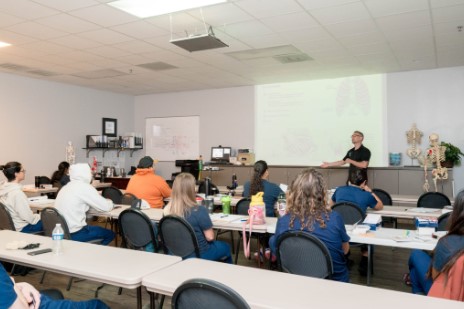
The learning environment can influence how comfortable students become with hands-on work. Class size, instructor availability, classroom facilities, massage tables, equipment, and opportunities for individual feedback are all worth considering.
A school that provides structured practice can allow students to identify weaknesses and improve their technique before entering professional practice.
Students may also want to learn how instructors support questions and corrections during practical sessions. Personal feedback can be particularly useful when developing techniques that require precise positioning or pressure.
Explore Different Massage Techniques
Massage therapy includes multiple approaches and techniques. A basic program may introduce foundational methods before students move toward more advanced applications.
For example, students may encounter Swedish massage techniques, deep tissue approaches, clinical massage concepts, relaxation techniques, or spa-oriented services depending on the curriculum.
Learning different approaches can help students understand how massage techniques are adapted to different client preferences and professional settings. However, students should focus first on mastering foundational skills rather than simply collecting a long list of techniques.
Consider the Connection Between Education and Practice
Massage schools that operate or work alongside student clinics can provide an environment where students apply classroom concepts under supervision.
For someone researching massage in San Antonio, this distinction is useful because receiving a massage as a customer and learning to provide massage professionally are very different experiences. Students need to understand communication, intake procedures, professional boundaries, sanitation, positioning, and documentation in addition to massage techniques.
A supervised student clinic can provide experience with these practical aspects of working with members of the public.
Review the Program Schedule
The best program is not necessarily the one with the shortest completion time. Students should consider whether the schedule fits their existing responsibilities.
Some schools may offer daytime and evening classes, while others may have different scheduling structures. The number of hours students attend each week can affect how quickly they complete the required education.
TDLR also requires schools to provide prospective students with information about program length, required hours, internship details, tuition, fees, and other charges before enrollment.
Reviewing these details in advance can make it easier to compare programs accurately.
Look at the School’s Facilities
Hands-on professions depend heavily on suitable facilities. Prospective students should consider whether the school provides appropriate classrooms, practice areas, equipment, and sanitation facilities.
A professional learning environment can help students become familiar with the type of setting they may encounter after graduation.
It is also worth asking whether students have access to sufficient practice time. Having access to equipment is useful, but opportunities to actually use it under instructor supervision are equally important.
Consider What Happens After Graduation
Massage therapy education does not necessarily end when a student completes the basic course. Continuing education can help licensed massage therapists maintain and develop their professional knowledge.
In Texas, licensed massage therapists must complete at least 12 hours of TDLR-approved or recognized continuing education to renew their licenses. The accepted subjects can include massage practice, anatomy, physiology, kinesiology, pathology, hydrotherapy, ethics, business practices, and massage therapy laws and rules.
Students can therefore benefit from choosing a school that encourages continued professional development rather than treating graduation as the end of learning.
What Questions Should You Ask Before Enrolling?
Before selecting a program, prospective students can create a short checklist of questions:
- Does the program meet Texas’s 500-hour minimum?
- What subjects are included in the curriculum?
- How much hands-on practice is provided?
- How is the internship structured?
- What are the class schedules?
- What tuition and additional fees apply?
- What equipment and facilities are available?
- How much instructor feedback do students receive?
- How does the school prepare students for licensing requirements?
- What opportunities exist for continued education?
Comparing these details can provide a clearer picture than evaluating schools based on advertising or location alone.
Consider the School’s Broader Training Approach
A massage therapist may eventually work in a variety of professional environments, including wellness practices, clinics, spas, fitness facilities, private practices, or other settings. Understanding the differences between these environments can help students think about the type of career they want to pursue.
Someone researching a massage spa in San Antonio may be interested in relaxation and spa-oriented services, while another student may be more interested in clinical or therapeutic applications. A well-rounded educational foundation can provide flexibility as professional interests develop.
Similarly, familiarity with services such as full-body massage in San Antonio can help students understand what clients may expect from a complete massage session, including communication, preparation, positioning, and professional conduct.
Choosing a School With Your Long-Term Goals in Mind
Selecting a massage therapy school is an important educational decision. The right program should provide the required academic foundation while also giving students meaningful opportunities to practice and develop professional skills.
Students should compare curriculum, hands-on training, internship structure, instructors, facilities, scheduling, costs, and licensing preparation before making a decision. It can also be useful to visit schools and ask questions directly rather than relying only on online information.
Conclusion
Becoming a massage therapist requires structured education, supervised practice, and an understanding of the professional responsibilities involved in providing massage services. In Texas, the required 500-hour education program provides the foundation for meeting the state’s licensing requirements, while practical training helps students turn classroom knowledge into usable skills. For prospective students, comparing curriculum, hands-on experience, internship opportunities, scheduling, facilities, and licensing preparation can make the selection process more straightforward. A school such as Academy for Massage Therapy Training can be evaluated against these same practical criteria to determine whether its programs align with a student’s educational and career goals.