
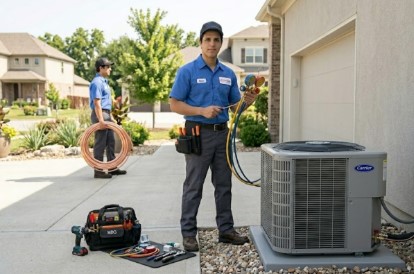
Air conditioning is an important part of indoor comfort in warm Texas weather. For homeowners planning AC installation in Seguin, TX, the process involves more than placing a new unit outside and connecting it to the home. System size, duct condition, airflow, thermostat setup, refrigerant charge, and installation quality all affect how well the air conditioner performs.
A properly installed AC system can help maintain steady cooling, reduce avoidable strain, and support better energy use. On the other hand, poor installation can lead to uneven temperatures, short cycling, higher utility bills, and early system problems. This is why homeowners should understand the main steps involved before replacing or installing a cooling system.
AC Installation Starts with Correct System Sizing
Correct sizing is one of the most important parts of AC installation. An air conditioner that is too small may run constantly and still fail to cool the home properly. A system that is too large may cool too quickly without removing enough humidity.
Professional sizing usually considers home square footage, insulation, windows, ceiling height, sun exposure, ductwork, and local climate. This helps determine the cooling capacity needed for the home. Choosing based only on the size of the old unit may not always be accurate, especially if the home has changed over time.
Ductwork Condition Affects Cooling Performance
The duct system carries cooled air throughout the home. If ducts are leaking, poorly insulated, blocked, or incorrectly sized, even a new AC system may not work efficiently. Air loss in the ductwork can reduce comfort and increase energy waste.
Before installation, ducts should be checked for damage, loose connections, and airflow restrictions. In some cases, duct repair or sealing may be needed before the new system is installed. This can help the air conditioner deliver conditioned air more evenly.
Proper Placement Helps the Outdoor Unit Work Efficiently
The outdoor condenser needs enough space for airflow. If it is placed too close to walls, fences, shrubs, or other equipment, heat may not release properly. Poor airflow around the outdoor unit can make the system work harder than necessary.
The unit should be placed on a stable, level pad. It should also be positioned where service technicians can access it for maintenance and repairs. Good placement helps protect performance and makes future service easier.
Indoor Airflow Must Be Balanced
Cooling depends on steady airflow through the indoor coil and duct system. If airflow is too weak or too strong, the system may not remove heat and humidity correctly. This can affect comfort and equipment life.
Airflow problems may come from dirty filters, undersized ducts, blocked vents, incorrect blower settings, or poor installation. During setup, technicians should check airflow and make adjustments as needed. Balanced airflow helps the AC system cool rooms more consistently.
Refrigerant Charge Must Be Accurate
Refrigerant is the substance that absorbs and releases heat during the cooling process. If the refrigerant level is too low or too high, the system may not cool properly. An incorrect charge can also increase compressor strain.
During installation, the refrigerant charge should be measured according to the manufacturer’s requirements. This step should not be guessed. Accurate refrigerant setup helps the system operate closer to its designed performance.
Electrical Connections Need Careful Setup
AC systems require safe and correct electrical connections. Wiring, breakers, disconnects, and control connections should match the equipment specifications. Poor electrical work can create safety risks or cause repeated system failures.
A proper installation includes checking voltage, tightening connections, confirming breaker compatibility, and testing system controls. The thermostat must also communicate correctly with the equipment. These details help the system operate safely and reliably.
Thermostat Setup Influences Comfort
The thermostat controls when the AC system turns on and off. If it is installed in the wrong location, it may read the temperature incorrectly. This can cause the system to run too often or not enough.
Thermostats should usually be placed away from direct sunlight, supply vents, kitchens, exterior doors, and heat-producing appliances. Smart or programmable thermostats may also need correct settings for schedules, cooling stages, and fan operation. Proper setup helps support steady indoor comfort.
Maintenance Should Follow Installation
After a new AC system is installed, routine maintenance helps keep it working properly. Filters should be changed regularly, and the system should be inspected before heavy cooling seasons. Maintenance can identify small issues before they lead to expensive repairs.
Basic maintenance may include checking refrigerant levels, cleaning coils, inspecting electrical components, clearing drain lines, and testing airflow. Homeowners should also keep the outdoor unit clear of leaves, grass, and debris. These habits help protect the investment in the new system.
Questions to Ask Before Installation
Before scheduling AC installation, homeowners should ask practical questions. This helps clarify what is included and what to expect during the project.
Useful questions include:
- What size AC system does the home need?
- Will ductwork be inspected before installation?
- Is the estimate for equipment and labor included?
- Are permits required?
- What efficiency rating is recommended?
- Where will the outdoor unit be placed?
- Will the thermostat be replaced or reused?
- What warranty applies to equipment and labor?
- How long will installation take?
- What maintenance is recommended after installation?
Clear answers can help homeowners make better decisions and avoid confusion.
Final Thoughts
AC installation in Seguin, TX, should be planned carefully because the installation process affects comfort, efficiency, airflow, and equipment life. Correct sizing, duct evaluation, unit placement, refrigerant setup, electrical work, and thermostat configuration all play important roles. When homeowners understand why proper AC installation is important in the middle of the decision-making process, they can better compare estimates, ask the right questions, and choose an installation approach that supports reliable cooling through hot Texas seasons.