
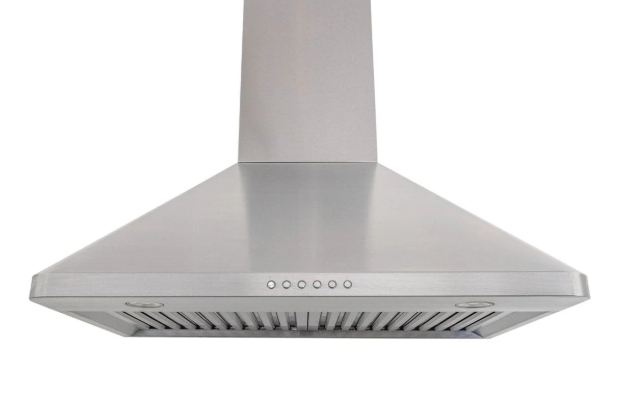
Most homeowners spend weeks selecting countertops, cabinetry, and cooktops during a kitchen renovation, yet give barely a passing thought to the appliance responsible for keeping the air they breathe clean, fresh, and free from the grease, smoke, moisture, and cooking odours that every stovetop session produces. A Kitchen Range Hood is not a decorative accessory. It is a performance appliance that directly protects your indoor air quality, prevents grease buildup on surfaces and cabinetry, reduces moisture that leads to mould growth, and ensures that your kitchen remains a comfortable, healthy space for your family every single day.
How a Kitchen Range Hood Protects Your Home
Every time you cook, your stovetop releases a cocktail of airborne particles including grease vapour, carbon monoxide, nitrogen dioxide, volatile organic compounds, and steam that, without proper ventilation, settle on every surface in your kitchen and migrate throughout your home. A properly sized Kitchen Range Hood captures these contaminants at the source before they disperse, channelling them through filters and either exhausting them outdoors through ductwork or recirculating cleaned air back into the room.
The health implications are real and well-documented. Studies have consistently linked poor kitchen ventilation to:
- Elevated indoor levels of nitrogen dioxide and carbon monoxide from gas burners
- Increased respiratory irritation and aggravation of asthma symptoms in household members
- Accelerated grease accumulation on cabinets, walls, and ceilings requiring more frequent deep cleaning
- Excess moisture buildup promoting mould and mildew growth in kitchen and adjacent areas
- Lingering cooking odours that permeate soft furnishings, curtains, and clothing throughout the home
Choosing the Right Type for Your Kitchen
Selecting the right Kitchen Range Hood depends on your kitchen layout, cooking style, cooktop size, and aesthetic preferences. The main categories available include wall-mount hoods that install against a flat wall above the cooktop, island hoods that hang from the ceiling above freestanding kitchen islands, under-cabinet hoods that mount beneath existing cabinetry for a space-efficient profile, insert hoods that integrate into custom cabinetry for a seamless built-in appearance, and downdraft systems that retract into the countertop when not in use.
Each type serves a different spatial and design requirement, but the core performance specifications that matter remain consistent across all categories.
Sizing and Airflow
A Kitchen Range Hood must be sized correctly to perform effectively. The general rule is that the hood should be at least as wide as the cooktop it serves, with professional-grade installations often extending three to six inches beyond each side for maximum capture efficiency. Airflow capacity, measured in cubic feet per minute, should match your cooking intensity and cooktop output.
Key sizing guidelines include:
- Standard gas ranges: minimum 100 CFM per 10,000 BTU of burner output
- Electric cooktops: minimum 1 CFM per 10 square inches of cooktop surface area
- High-output professional ranges: 900 to 1,200 CFM or higher depending on total BTU rating
- Island installations: add approximately 150 additional CFM to compensate for cross-drafts from open sides
Noise, Filters, and Maintenance
Noise levels vary significantly between Kitchen Range Hood models and directly affect whether you actually use the appliance consistently or leave it off because the sound is intrusive. Look for models rated at 6 sones or below for comfortable everyday use, with premium models achieving 3 to 4 sones at medium speed settings. Baffle filters are preferred for their superior grease capture efficiency and dishwasher-safe maintenance convenience compared to mesh filters that clog more quickly and require more frequent replacement.
The Last Word
A Kitchen Range Hood is the hardest-working appliance in your kitchen, protecting your health, your cabinetry, and your indoor air quality with every meal you prepare. For homeowners designing or upgrading an outdoor cooking space alongside their indoor kitchen, investing in a purpose-built Outdoor Kitchen Range Hood ensures the same level of ventilation performance, grease protection, and cooking comfort extends to your alfresco entertaining area where weather-resistant construction and higher airflow ratings are essential for open-air environments.