
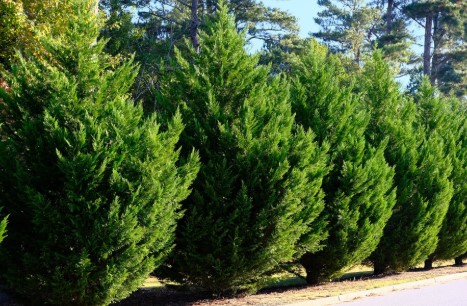
A tall, narrow tree can change the proportions of a landscape without taking up the ground space required by a broad-canopied specimen. This is one reason Mediterranean-style gardens often use upright evergreen forms to frame entrances, line driveways, and create vertical accents. The characteristic silhouette is elegant, but successful planting depends on more than appearance. Soil drainage, sunlight, spacing, establishment watering, and the Italian Cypress tree’s natural mature form all influence how well it performs. Understanding these requirements before installation helps prevent problems that are difficult to correct once the trees are established.
What makes the tree distinctive?
Italian Cypress (Cupressus sempervirens) is an evergreen conifer recognized for its tall, columnar habit and dense, scale-like foliage. Depending on the cultivar and growing conditions, it can develop into a substantial tree while maintaining a comparatively narrow outline. Its upright form makes it useful in formal landscapes, where repeated vertical shapes can frame a view or emphasize an architectural feature.
It is not a compact shrub, however. Mature trees can exceed 12 metres in height, and some forms develop a wider spread than their young appearance suggests. The expected dimensions should guide placement, particularly near buildings, paths, and overhead structures.
Choose a position with enough sunlight
A sunny, open position generally supports strong growth and helps the tree maintain its characteristic form. Shaded locations can produce weaker or less balanced growth, especially when nearby plants compete for light. Before planting a row, observe how sunlight moves across the site and check whether buildings or mature trees will cast substantial shade.
Air movement and exposure also matter. A sheltered position can protect young trees from damaging winds, while adequate spacing allows the foliage to dry after rainfall or irrigation. Avoid squeezing several specimens into a narrow strip simply to create an immediate visual screen.
Drainage is more important than frequent watering
Although established Italian Cypress can tolerate dry conditions, young trees need regular moisture while their roots develop. The goal is to water deeply enough to moisten the root zone, then allow excess water to drain. A fixed daily watering routine can be harmful if the soil remains wet between applications.
Well-drained soil is essential. Heavy ground that stays saturated can contribute to root problems, including root rot. If water collects around the planting area after rain, improve drainage or choose a better location before installing the tree.
During the first growing season, check soil moisture beneath the surface rather than judging it by the appearance of the topsoil alone. As the tree becomes established, reduce watering according to rainfall and local conditions. Mature trees are generally more drought-tolerant than newly planted specimens.
Space trees according to their mature form
A line of cypress trees can create a strong architectural effect, but the spacing needs to account for future growth. Closely planted trees may form a more continuous visual feature, while wider spacing emphasizes each column. The correct distance depends on the cultivar, the intended design, and the amount of room available.
For a driveway or entrance, mark the proposed planting positions before digging. Check vehicle clearance, sightlines, underground utilities, and the distance from paving. A mature tree should not obstruct access or require constant corrective pruning to fit the site.
If the goal is a dense privacy hedge, remember that Italian cypress is naturally a narrow upright tree rather than a broad shrub. It may provide vertical screening, but it will not behave like every conventional hedge species.
Keep pruning minimal
The tree’s natural columnar shape is one of its main advantages. Routine heavy trimming is usually unnecessary and can damage its appearance. Avoid cutting deeply into old, bare wood because many conifers do not reliably produce new foliage from those sections.
Remove dead or damaged branches when necessary, using clean tools and appropriate pruning techniques. If a tree has become too large for its location, severe topping is unlikely to restore a balanced form. Selecting a suitable planting position and cultivar is a better long-term solution than trying to control an unsuitable tree through repeated cutting.
Watch for common health problems
Inspect foliage for browning, thinning, or unusual discoloration. These symptoms can result from drought stress, excessive irrigation, poor drainage, pests, or disease. Spider mites and other pests may affect cypress trees, while persistently wet soil can increase the risk of root disorders. Check the growing conditions before assuming that a single treatment will solve the problem.
Keep mulch away from the trunk and avoid burying the root collar. Good airflow, appropriate irrigation, and well-drained soil help reduce avoidable stress.
Conclusion
Italian Cypress works best when its mature height and narrow profile are treated as design features rather than limitations. It can frame an entrance, emphasize a pathway, or introduce vertical rhythm into a landscape. Review the available trees from Plant Clearance and compare their growing requirements with the site before planting. A carefully selected position allows the tree’s natural form to remain the focus as it matures.