
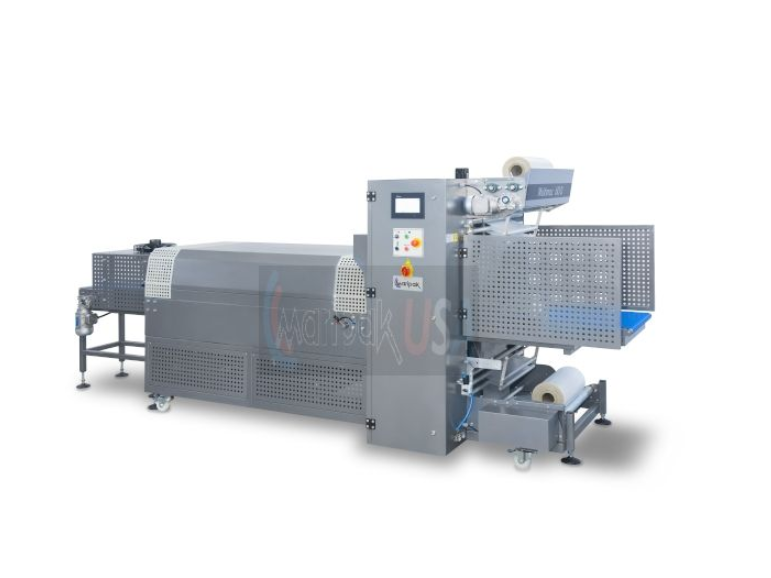
Industrial packaging lines often need to group multiple products into stable, uniform bundles for storage, distribution, or retail handling. A shrink-bundling process uses film and heat to hold products together, helping create packages that are easier to move and identify. However, choosing equipment for this purpose involves more than comparing machine speeds. Product dimensions, bundle configuration, film properties, line layout, and production requirements all influence the decision.
A shrink bundler can be useful in operations that package products in repeatable groups, but the equipment must match the items being handled. Reviewing the complete packaging process helps determine which machine configuration is practical and what capabilities are genuinely necessary.
1. Define the Bundle Configuration
Begin by identifying how products will be grouped. Common examples include beverage multipacks, cartons, containers, household goods, and other items that need to be secured together. The number of products in each bundle, their arrangement, and their combined dimensions will influence machine selection.
Measure the largest and smallest bundle configurations expected on the line. Consider whether products will be arranged in rows, stacked, or placed side by side. Some operations use a single standard bundle, while others need flexibility for several product formats.
The packaging method should keep products stable without applying unnecessary pressure. If items have fragile surfaces, unusual shapes, or uneven weight distribution, test the proposed arrangement before finalizing equipment specifications.
2. Evaluate Production Requirements
Production volume helps determine the appropriate level of automation. A low-volume operation may not need the same continuous processing capacity as a facility packaging large quantities throughout multiple shifts.
Estimate the required number of bundles per hour, then account for product loading, spacing, film changes, and downstream handling. A machine’s maximum rated speed may not reflect the output achieved during normal production.
Consider future demand as well. If output is expected to increase, it may be useful to evaluate equipment that can accommodate additional capacity without requiring a complete packaging-line redesign. However, avoid paying for capabilities that have no realistic operational purpose.
3. Understand Film Selection
Film choice affects bundle appearance, strength, and performance during the shrinking process. Polyethylene is commonly used in industrial bundling applications because it can provide the strength needed to hold groups of products together.
Film thickness should be selected according to bundle weight, product edges, handling conditions, and distribution requirements. A heavier film is not automatically the best choice. Excess material can increase costs and may affect how the package performs during sealing and shrinking.
Review the film manufacturer’s recommendations and confirm that the selected equipment can handle the intended material, width, and thickness.
4. Consider Feeding and Conveyor Integration
A bundling machine is only one part of a production line. Products may arrive from filling, labeling, cartoning, or assembly equipment, and finished bundles may move toward case packing, palletizing, or storage.
Review how products will enter the machine and how bundles will exit. Consistent spacing and orientation can help reduce jams and uneven wrapping. Conveyor height, speed, and transfer points should be compatible with the surrounding equipment.
If product sizes change frequently, consider how adjustments are made. Easy-to-access controls and repeatable setup procedures can reduce changeover time.
5. Examine Safety and Maintenance Needs
Industrial packaging equipment includes moving components and heated sections, so operator safety should be part of the purchasing assessment. Review guarding, emergency stops, access panels, and the manufacturer’s operating procedures.
Maintenance requirements should be equally clear. Ask about routine inspections, cleaning, lubrication, wear parts, and service intervals. Confirm whether technical support and replacement components are available when needed.
6. Calculate Total Operating Costs
Compare more than the initial equipment price. Film use, energy consumption, labor requirements, maintenance, downtime, and rejected packages all contribute to long-term operating costs.
A machine that reduces manual handling may improve workflow, but the actual benefit depends on the production environment. Consider the number of operators required, the time needed for changeovers, and how much floor space the system occupies.
Conclusion
A well-matched industrial packaging system should support the required bundle sizes, production rate, film specifications, and line configuration. Where individual retail products require a different film and finish, a polyolefin shrink machine may be evaluated separately according to the product’s packaging needs. Careful evaluation before purchase can help reduce operating disruptions and improve consistency.