
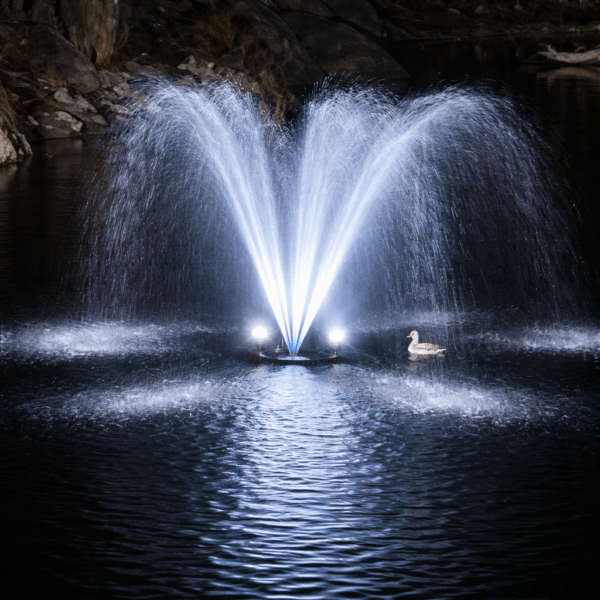
Water features have become a common element in landscape design, offering both aesthetic appeal and environmental benefits such as improved air circulation and relaxation. Lighting plays a major role in enhancing these installations, especially after sunset when visual impact depends entirely on illumination systems. In many modern setups, water fountain LED lights are used to highlight movement, shape, and water flow patterns in ponds and fountains, making them an essential part of outdoor design planning.
As lighting technology evolves, LED systems are increasingly preferred due to their efficiency, durability, and adaptability to underwater environments.
What Are Water Fountain LED Lights?
Water fountain LED lights are specially designed lighting systems that operate safely in wet or fully submerged conditions. Unlike traditional lighting, these fixtures are built with waterproof sealing and corrosion-resistant materials to withstand constant exposure to water.
These lights are typically installed inside or around fountains, ponds, and water jets. They are designed to illuminate moving water, creating visual effects that enhance the natural motion of the fountain. LED technology allows for stable light output while consuming significantly less energy compared to older halogen-based systems.
How Water Fountain LED Lights Work
LED fountain lighting systems operate using low-voltage electricity, which is safer for underwater environments. The lights are sealed within protective housings, often rated for full submersion. Once installed, they emit focused or wide-angle beams depending on design requirements.
Light interacts with moving water to create reflection, refraction, and dispersion effects. This interaction is what produces the glowing, dynamic appearance commonly seen in illuminated fountains. Some systems also offer color variations, allowing designers to adjust ambiance based on time or setting.
Key Benefits of LED Fountain Lighting Systems
Energy Efficiency
LED systems consume less electricity compared to traditional lighting, making them more suitable for continuous or long-duration operation in outdoor environments.
Long Lifespan
LED lights are designed for extended operational life, reducing the need for frequent replacement and lowering maintenance requirements.
Safety in Water Environments
Because they operate on low voltage and are sealed against water intrusion, LED fountain lights are safer for submerged installations.
Design Flexibility
These lighting systems can be installed in various configurations, including underwater placement, perimeter lighting, or directional spotlighting for specific features.
Applications in Water Features
LED fountain lights are used in a variety of environments, including:
- Garden ponds and decorative water features
- Public parks and landscaping installations
- Commercial fountains in hotels and plazas
- Residential outdoor water gardens
Their versatility allows them to adapt to both small decorative setups and large-scale architectural water displays.
Role of Pump Systems in Fountain Performance
Lighting alone does not define a water feature; water movement is equally important. Fountain systems rely on pumps to circulate and project water into the air or across surfaces. The strength of the pump determines the height, pressure, and flow pattern of the fountain.
In many installations, a 1/2 hp pond fountain pump is used for medium-sized water features. This type of pump provides sufficient power to maintain steady water circulation while supporting decorative spray patterns. When combined with LED lighting, it enhances the overall visual experience by synchronizing water motion with illumination effects.
Maintenance and Safety Considerations
Proper maintenance ensures long-term performance of both lighting and fountain systems. Regular cleaning helps prevent algae buildup and sediment accumulation, which can affect light clarity and water flow.
Electrical components should always be checked for insulation integrity, and waterproof seals must remain intact to prevent moisture damage. Low-voltage systems are generally safer, but periodic inspection is still necessary to ensure stable operation.
Environmental and Design Impact
Water features with integrated lighting contribute to outdoor ambiance while also supporting ecological balance in landscaped areas. Moving water can help improve oxygen levels in small ponds, while lighting enhances visibility and aesthetic value during nighttime hours.
Designers often use lighting strategically to highlight focal points, create depth perception, and emphasize motion within water structures.
Conclusion
Lighting technology has significantly transformed the way water features are designed and experienced. In larger setups where water movement plays a central role, components like a 1/2 HP pond fountain help maintain consistent flow and structure, ensuring that lighting effects are properly supported by dynamic water motion. Modern systems such as water fountain LED lights, provide efficient, durable, and visually appealing solutions for illuminating ponds and fountains in both residential and commercial spaces.