
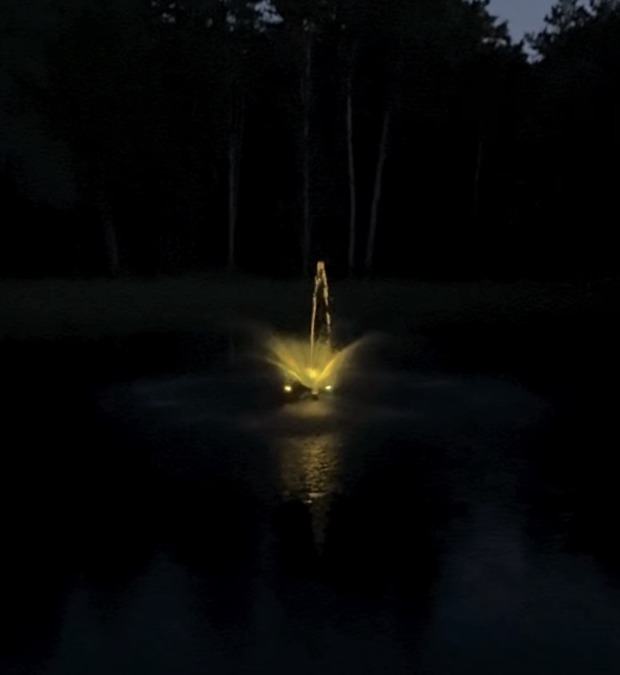
A 1/2 HP floating pond fountain is a water feature that uses a half-horsepower pump mounted on or connected to a floating structure to circulate pond water and create a visible spray pattern. Unlike fixed fountains that require a permanent base or submerged installation, floating systems are designed to remain on the water’s surface while the pump draws and moves water through the fountain assembly.
The horsepower rating describes the motor’s power capacity, but it does not by itself determine how high or wide a fountain will spray. Nozzle design, pump characteristics, water depth, plumbing configuration, and operating conditions all influence the final appearance.
1/2 HP floating pond fountain can serve both decorative and functional purposes. They can create movement on otherwise still water while also increasing interaction between the water surface and surrounding air.
How Does a Floating Pond Fountain Work?
The basic operating process involves drawing pond water into a pump and forcing it through a nozzle.
When the pump is switched on, water enters the intake system and is pushed upward through the fountain assembly. The nozzle shapes the water as it exits, producing the desired spray pattern.
Because the equipment floats, the fountain can remain positioned on the surface without requiring the pump to rest permanently on the pond floor.
The exact arrangement varies according to the fountain design. Some systems use a floating platform, intake screen, pump, discharge assembly, and decorative nozzle, while larger installations can incorporate additional electrical or anchoring equipment.
What Does 1/2 Horsepower Mean?
Horsepower is a measurement associated with mechanical power.
A half-horsepower motor has a nominal power rating of 0.5 HP. However, this rating should not be interpreted as a direct measurement of fountain height, flow rate, or visual coverage.
Pump performance depends on several variables, including:
- Pump design
- Water flow
- Head pressure
- Nozzle size
- Nozzle shape
- Intake conditions
- Water depth
- Electrical supply
For this reason, two fountains with motors of the same horsepower can produce different spray characteristics.
When selecting a fountain, buyers should examine pump specifications and expected performance rather than relying only on horsepower.
Why Is Water Movement Important in a Pond?
Water movement can change both the appearance and physical behaviour of a pond.
A fountain creates circulation by continuously moving water through the pump and spraying it above the surface. The resulting movement can help break up stagnant-looking surface areas and create visual interest.
Aeration can also occur when droplets interact with the atmosphere before returning to the pond.
However, the extent of oxygen transfer depends on factors such as fountain design, spray pattern, operating duration, pond size, weather, water temperature, and existing circulation.
A fountain should therefore be viewed as one part of overall pond management rather than a substitute for every other water-quality practice.
How Does a Fountain Affect Aeration?
Aeration refers to the transfer of oxygen between air and water.
When water is sprayed into the air, its surface area increases substantially. This can create more opportunity for interaction with atmospheric oxygen before the water falls back into the pond.
Spray-based fountains are therefore sometimes used in ponds where additional water movement is desirable.
The actual aeration performance varies considerably between fountain designs. A large spray pattern does not automatically mean that a particular system provides the maximum possible oxygen transfer.
Pond size, depth, biological activity, temperature, and other environmental conditions also influence dissolved oxygen levels.
What Determines the Spray Pattern?
The nozzle is one of the most important elements determining how a fountain looks.
Different nozzle designs can produce different shapes, including vertical columns, broad fans, tiered patterns, and other arrangements.
The same pump may therefore create different visual effects depending on the nozzle installed.
Water pressure and flow also affect the spray. A nozzle designed for a particular flow range may not perform as intended if the pump cannot provide the required conditions.
When comparing fountains, it is useful to examine the complete pump-and-nozzle combination rather than considering the motor independently.
Why Does Pond Depth Matter?
A floating fountain needs adequate water depth for its intake and operating components.
If the water level becomes too low, the intake may approach the pond bottom or become exposed to sediment and debris.
Water-level changes can occur because of evaporation, rainfall patterns, drainage, or seasonal conditions.
Regularly monitoring pond depth can help ensure that the fountain continues to operate within its intended conditions.
What Maintenance Does a Floating Fountain Require?
Regular maintenance helps keep a fountain operating efficiently.
Common tasks include:
- Inspecting the pump
- Cleaning the intake screen
- Removing leaves and debris
- Checking electrical connections
- Inspecting the float
- Examining the nozzle
- Checking anchors and ropes
- Monitoring water levels
- Looking for algae accumulation
Debris is particularly important because leaves, twigs, sediment, and other material can restrict water intake.
A blocked intake can reduce flow and place additional stress on the pump.
How Should the Pump Intake Be Maintained?
The intake allows pond water to enter the pump.
An intake screen or filter may help prevent larger debris from entering the pump assembly. Over time, organic material can accumulate around this area.
Reduced fountain output can be an early indication that the intake requires cleaning.
Before performing maintenance, the electrical supply should be disconnected according to appropriate safety procedures. Equipment should not be handled while energized.
What Role Does Anchoring Play?
Although a floating fountain remains on the water surface, it generally needs a method of positioning.
Anchoring prevents the fountain from drifting across the pond because of wind, currents, or other movement.
The anchoring arrangement depends on pond size, fountain design, water depth, and expected environmental conditions.
Anchors should be installed so they do not interfere with the fountain’s movement or place excessive strain on the floating structure.
Periodic inspection is advisable because ropes, cables, attachment points, and anchors can experience wear.
How Does Weather Affect Floating Fountains?
Outdoor fountains are exposed to changing environmental conditions.
Wind can alter spray patterns and may cause water to be carried outside the intended area. Heavy rain can change pond levels, while freezing temperatures can create additional risks in climates where water freezes.
Storm conditions may also increase the risk of debris entering the fountain.
For seasonal installations, operators should follow the equipment’s recommendations regarding shutdown, storage, or winter operation.
Can Fountain Lights Be Added?
Decorative lighting can change how a fountain appears after sunset.
Water fountain lights are commonly used to illuminate spray patterns and make water movement visible during evening hours.
Lighting can be positioned around the fountain or integrated into the fountain assembly, depending on the equipment design.
When adding lighting to an outdoor water feature, electrical safety is particularly important. Fixtures, cables, connectors, transformers, and protection devices should be appropriate for their intended outdoor and wet-location use.
Electrical components should be installed according to applicable safety requirements.
What Are the Benefits of Lighting a Fountain?
Lighting can provide several visual benefits.
A lit fountain may become a focal point in a landscape after dark, particularly when the spray pattern has a substantial vertical or fan-shaped profile.
Different lighting positions can emphasize different portions of the spray. Lighting colour can also affect the visual atmosphere, although the specific fixture and installation method determine what effects are possible.
Lighting should complement the fountain rather than overpower the surrounding landscape.
How Can Energy Use Be Managed?
A fountain’s energy consumption depends on its motor, operating duration, electrical characteristics, and other connected equipment.
A half-horsepower motor does not necessarily consume exactly the same amount of electricity under all operating conditions. Actual electrical consumption depends on motor efficiency, load, voltage, and system design.
Using a timer or scheduled operating periods can help control how long the fountain runs.
For ponds where continuous operation is unnecessary, a carefully planned schedule may reduce electricity use while still providing the desired visual effect.
What Should You Consider Before Buying a Floating Fountain?
Several factors should be considered before choosing a fountain.
These include:
- Pond surface area
- Pond depth
- Desired spray height
- Desired spray width
- Pump power
- Nozzle configuration
- Electrical requirements
- Anchoring method
- Maintenance needs
- Seasonal conditions
- Lighting requirements
The fountain should be appropriately sized for the pond.
An oversized spray can create excessive water movement or wind-driven splash, while an undersized fountain may not create the desired visual effect.
How Can You Troubleshoot Reduced Water Flow?
A reduction in spray height or volume does not necessarily mean the pump has failed.
Potential causes include a clogged intake, blocked nozzle, low water level, damaged plumbing, electrical problems, or mechanical wear.
Troubleshooting should begin with simple checks.
Inspect the intake and nozzle for debris, confirm that the pond has adequate water, and examine the system for visible damage. If the problem persists, further electrical or mechanical diagnosis may be required.
Attempting electrical repairs without appropriate expertise can create serious safety risks.
How Long Should a Fountain Operate?
There is no universal operating schedule for every pond fountain.
The appropriate runtime depends on the fountain’s purpose, pond conditions, energy considerations, climate, and equipment design.
Some owners may operate a decorative fountain primarily during daylight or evening hours, while other installations may use longer schedules to support continuous circulation.
The manufacturer’s operating recommendations should be considered when establishing a routine.
Conclusion
A 1/2 HP floating pond fountain combines a half-horsepower pump, floating structure, intake system, and nozzle to circulate pond water and create a visible spray. Its performance depends on more than motor horsepower, with nozzle design, water depth, pump characteristics, and operating conditions all influencing the final result. For evening installations, water fountain lights can add another visual dimension by illuminating the spray and making the feature more noticeable after dark. Electrical equipment used around water should always be selected and installed with appropriate safety precautions.