
Choosing a microwave for an existing kitchen requires more planning than comparing wattage and cooking presets. Width, cabinet clearance, ventilation, electrical requirements, cooking capacity, door movement, and installation height can all determine whether an appliance works properly in the available space. A 30 inch over the range microwave is particularly common because it is designed to occupy the area above a standard-width cooktop or range while combining cooking and ventilation functions.
For homeowners renovating a kitchen or replacing an older appliance, accurate measurements are essential. Understanding the most important specifications beforehand can prevent installation problems and help create a more practical cooking area.
Why Is 30 Inches Such a Common Microwave Width?
Many residential ranges and cooktops are approximately 30 inches wide, so over-the-range microwaves are commonly designed around a similar width.
A 30 inch over the range microwave can create a visually aligned installation while making use of vertical space that might otherwise be occupied by a separate range hood.
Actual appliance dimensions can vary slightly from the nominal 30-inch description. Buyers should therefore check the manufacturer’s precise width, depth, and height rather than assuming every model measures exactly 30 inches.
The cabinet opening should also be measured at several points because older cabinetry may not be perfectly square.
Measure the Available Space Before Shopping
Accurate measurements should be the first step.
Measure the width between the upper cabinets, the distance from the bottom of the cabinet above to the cooking surface, and the depth available for the appliance.
When installing a 30 inch over the range microwave, also consider how far the unit will project from the cabinetry. Deeper models may extend noticeably beyond standard upper cabinets.
Door clearance matters as well. A microwave positioned close to a wall or tall cabinet may not open fully if the door requires side clearance.
Always compare these measurements with the installation documentation for the exact model being considered.
Check the Required Installation Height
An over-the-range microwave needs adequate clearance from the cooking surface.
The appropriate mounting height can depend on the appliance, range type, cabinet configuration, and manufacturer requirements. Building and installation requirements may also affect placement.
Installing the microwave too low can interfere with larger cookware and make the cooking surface feel cramped. Placing it excessively high can make controls and hot containers difficult to reach safely.
A 30 inch over the range microwave should therefore be positioned according to the specific installation instructions rather than simply matching the height of an older appliance.
Understand the Ventilation Options
One major advantage of an over-the-range microwave is that it can also function as a ventilation appliance.
Depending on the model and kitchen setup, ventilation may be configured to exhaust air outdoors through ductwork or recirculate filtered air back into the room.
External venting generally removes cooking moisture, smoke, and odours more effectively when properly installed. Recirculating systems can be useful where exterior ducting is impractical, but their filters require periodic maintenance or replacement.
Before choosing a 30 inch over the range microwave, determine which ventilation configuration the kitchen can support.
Compare Ventilation Power Carefully
Ventilation performance is commonly expressed in cubic feet per minute, or CFM.
Higher airflow can be useful for kitchens where frying, searing, and high-heat cooking occur frequently. However, the ideal airflow also depends on duct design, range output, kitchen size, and local requirements.
A powerful fan connected to poorly designed or undersized ductwork may not perform as expected.
Noise should also be considered. Some ventilation systems provide several fan speeds, allowing users to select lower settings for routine cooking and higher airflow when smoke or steam increases.
Consider Interior Cooking Capacity
Exterior width does not tell the whole story about interior capacity.
Two 30-inch models can have different internal volumes depending on construction, control placement, and ventilation design.
When comparing a 30 inch over the range microwave, consider the dishes that will actually be used inside it. Large dinner plates, casserole dishes, tall containers, and family-sized bowls may require more interior space.
Turntable diameter can also affect usability. A larger cavity does not always mean the rotating plate will accommodate every wide dish.
Compare Cooking Power and Features
Microwave wattage influences cooking speed, but power should be evaluated alongside controls and cooking functions.
Useful features can include sensor cooking, automatic reheating, defrost settings, multi-stage cooking, preset programmes, and adjustable power levels.
Some premium appliances may also incorporate convection cooking or other functions that extend beyond standard microwave heating.
However, more features are not always necessary. Buyers should prioritise settings they expect to use regularly rather than paying extra for functions that may rarely leave the control panel.
Pay Attention to Control Placement
Controls can appear on the right side of the door, along the bottom edge, or behind the door on some modern models.
The best configuration depends partly on installation height and user preferences.
A 30 inch over the range microwave mounted relatively high may be easier to operate when frequently used controls are positioned lower on the appliance.
Households should also consider accessibility for shorter adults and older family members. Reaching above a hot cooking surface to operate controls or remove heated food can be inconvenient if the microwave is installed too high.
Think About Cooktop Lighting
Over-the-range microwaves commonly include built-in lights underneath the appliance.
This lighting illuminates the range or cooktop and can become an important part of everyday food preparation. Buyers should compare brightness levels, light settings, and bulb or LED configurations.
Multiple brightness levels can be useful because strong lighting may be preferred during cooking while softer illumination can function as ambient kitchen lighting.
Good task lighting becomes particularly valuable when upper cabinetry blocks some ceiling light from reaching the cooking surface.
Installation Requires More Than Wall Mounting
An over-the-range microwave is heavier and more complicated to install than a countertop appliance.
Installation typically involves a wall mounting bracket, attachment to the upper cabinet, electrical access, and ventilation configuration. Ductwork may also need adjustment when replacing an older model.
A 30 inch over the range microwave must be securely attached to suitable structural support. Incorrect installation can create both safety and performance problems.
Homeowners unsure about electrical, structural, or ducting requirements should consider professional installation rather than improvising mounting solutions.
Should You Replace the Range Hood With a Microwave?
Combining ventilation and microwave cooking can save valuable counter space, making over-the-range appliances attractive in smaller kitchens.
However, a dedicated range hood may provide stronger ventilation in some kitchens, particularly where high-output cooking appliances are used frequently.
The decision depends on cooking habits, available space, ventilation requirements, and kitchen design.
A 30 inch over the range microwave can be an efficient space-saving solution, but ventilation performance should be evaluated just as carefully as microwave functionality.
Match the Appliance to the Wider Kitchen Layout
Appliances should work together visually and practically.
Door styles, handle designs, finishes, control layouts, and overall proportions can influence how coordinated a kitchen feels. Stainless steel, black, white, and other finishes can each work well depending on surrounding cabinetry and appliances.
However, matching appearance should come after dimensional compatibility and functional requirements.
A microwave that looks perfectly coordinated but provides inadequate clearance or ventilation will create more problems than a slightly different model that fits the kitchen correctly.
Conclusion
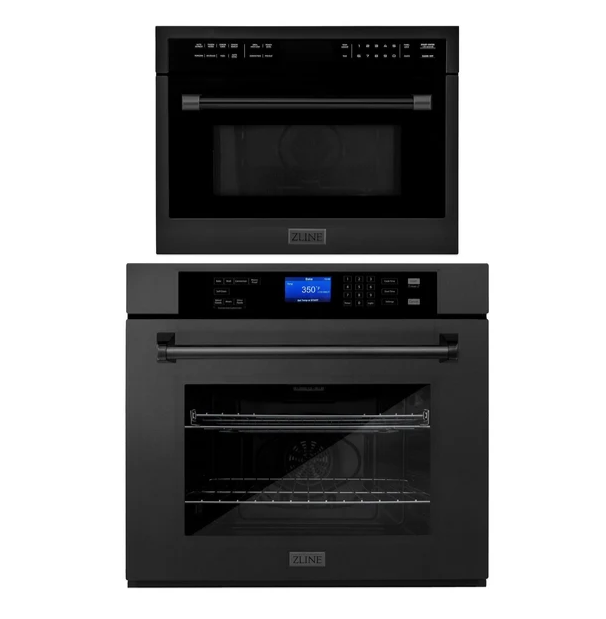
Selecting an over-the-range microwave requires attention to measurements, installation height, ventilation, cooking capacity, controls, lighting, and electrical requirements. A correctly sized 30 inch over the range microwave can save counter space while combining everyday reheating with cooktop ventilation in a single appliance. Homeowners comparing coordinated options such as Zline appliance packages should still evaluate each individual appliance for dimensions, ventilation requirements, capacity, and installation compatibility rather than choosing solely for a matching appearance. Careful planning before purchase can prevent expensive installation changes later. By measuring accurately and comparing real-world functionality alongside design, homeowners can choose an over-the-range microwave that fits both the physical kitchen and everyday cooking habits.