
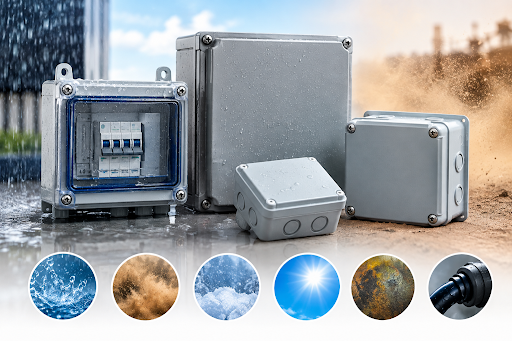
Electrical equipment can be exposed to dust, water, oil, corrosive substances, and other environmental conditions depending on where it is installed. The enclosure surrounding that equipment needs to provide an appropriate level of protection for the application. This is where NEMA ratings become important.
Rather than simply describing an enclosure as waterproof or dustproof, NEMA Type classifications identify specific environmental conditions an enclosure is designed to protect against. ANSI/NEMA 250 covers electrical enclosures for equipment rated at no more than 1,000 volts and includes multiple enclosure Types for indoor, outdoor, and certain hazardous locations.
Understanding the differences between enclosure Types can make it easier to specify suitable protection for electrical installations.
What Are NEMA Ratings?
NEMA ratings are enclosure Type classifications associated with standards developed by the National Electrical Manufacturers Association. They indicate the environmental conditions against which an enclosure is designed to protect electrical equipment.
The NEMA system includes Types such as 1, 3, 3R, 4, 4X, 6, 12, and 13 for various applications. Separate Types also address certain hazardous classified locations. The applicable Type depends on the conditions expected at the installation site.
Importantly, a NEMA Type is not simply a measurement of how much water or dust an enclosure can withstand. The standards can address several environmental hazards and testing requirements, making it important to select an enclosure based on the complete application rather than a single characteristic.
Why Do NEMA Ratings Matter?
An enclosure that works well in a clean indoor electrical room may not be suitable for an outdoor industrial installation. Rain, snow, splashing water, airborne particles, oil, and corrosive conditions can all affect the type of protection required.
For example, NEMA Type 4 enclosures are evaluated for protection against access to hazardous parts, solid-material ingress, and water exposure such as splashing water, rain, snow, and sleet. Type 4X includes additional corrosion protection requirements.
This distinction becomes especially important in manufacturing facilities, processing environments, outdoor installations, utility applications, and other locations where environmental exposure is a concern.
Common NEMA Enclosure Types
Different NEMA ratings correspond to different environmental requirements.
Type 1: Generally intended for indoor locations and provides protection against contact with enclosed equipment and limited amounts of falling dirt.
Type 3: Designed for indoor or outdoor use where protection against weather-related conditions is required.
Type 3R: Intended for indoor or outdoor applications and provides protection against rain, sleet, and snow.
Type 4: Provides protection against specified solid-material exposure and water, including splashing and hose-directed water.
Type 4X: Provides the protection associated with Type 4 while adding corrosion-resistance requirements.
Type 6: Provides protection against specified environmental conditions and includes requirements related to occasional temporary submersion.
Type 12: Commonly associated with industrial indoor environments where protection against dust, dirt, dripping water, and certain noncorrosive liquids is needed.
The precise requirements should always be checked against the applicable edition of the standard and the manufacturer’s documentation.
How Should You Choose the Right NEMA Rating?
Start by evaluating the installation environment. Determine whether the enclosure will be indoors or outdoors and identify potential exposure to rain, snow, dust, oil, water, chemicals, or corrosive materials.
Next, consider the electrical equipment that will be installed inside. Cable entries, mounting arrangements, access requirements, dimensions, ventilation, and heat dissipation can influence the enclosure design.
The installation method also matters. Modifying an enclosure by drilling holes, adding cable entries, or changing mounting arrangements can affect its environmental protection. NEMA guidance notes that certain Type-rated enclosures have specific requirements for mounting methods and field modifications.
Finally, verify the applicable electrical codes, standards, and manufacturer instructions before installation.
NEMA Ratings vs. IP Ratings
NEMA Types and IP ratings are sometimes discussed together, but they are not identical systems. IP ratings are based on IEC 60529 and primarily classify protection against solid particles and water.
NEMA enclosure Types can address additional hazards, including corrosion, rust, icing, oil, and coolants. NEMA therefore explains that there is no complete one-to-one equivalency between NEMA Types and IP ratings.
For installations in the United States, an IP rating should not automatically be treated as a substitute for the required NEMA Type. NEMA’s guidance specifically notes that NEC Section 110.28 does not permit IP ratings to substitute for enclosure Type ratings.
Conclusion
Choosing the appropriate enclosure starts with understanding the environmental conditions and the protection required by the electrical installation. NEMA ratings provide a standardized way to identify enclosure Types and their intended environmental protection characteristics. For installations that incorporate an electrical terminal box, matching the enclosure Type to the surrounding conditions is particularly important. Reviewing the applicable NEMA requirements and manufacturer specifications before installation can help ensure that the selected enclosure is appropriate for its intended application.